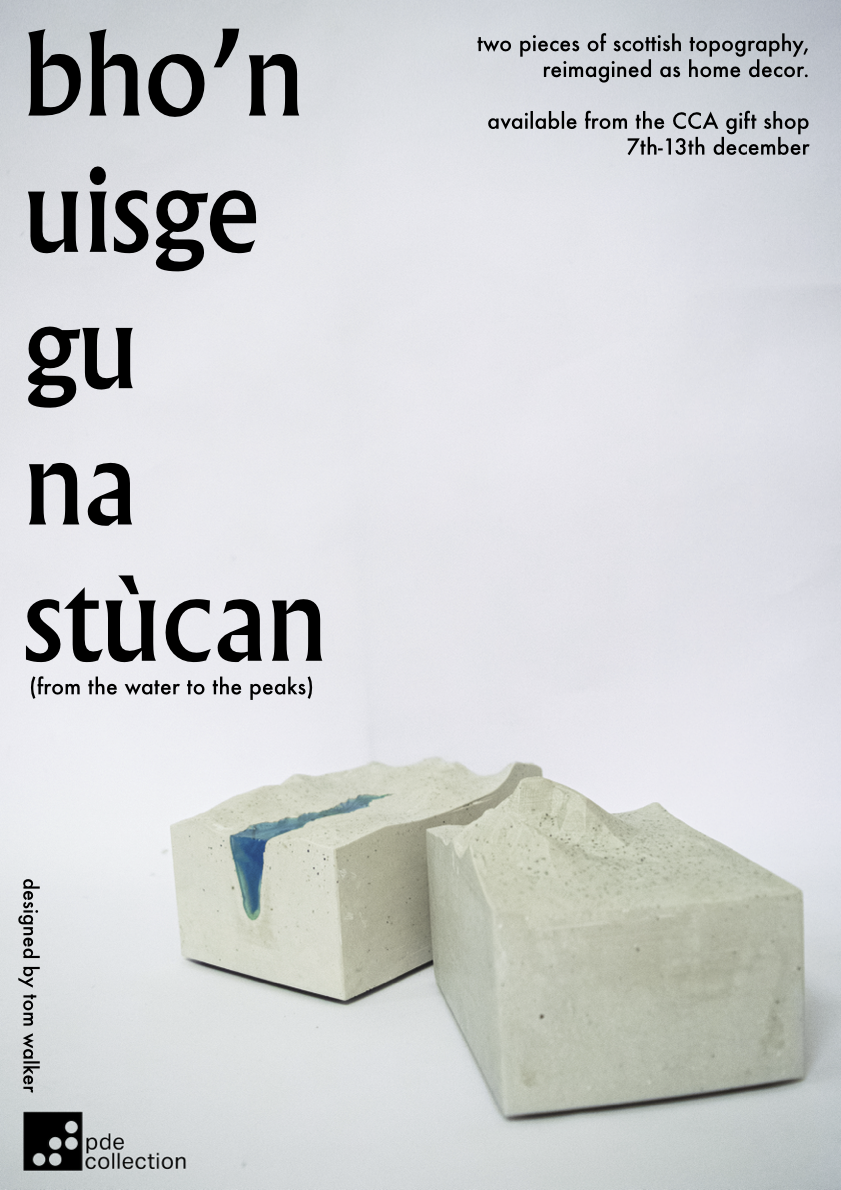
Bho’n Uisge Gu Na Stùcan
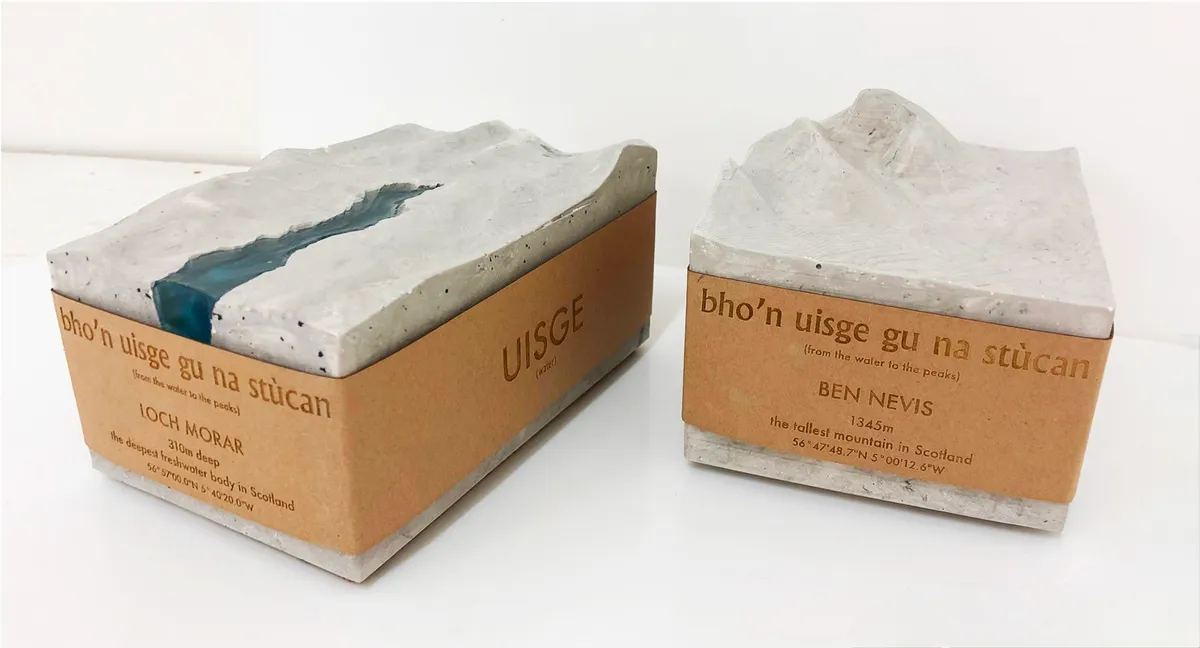
A pair of cast Jesmonite topographic blocks based on Scottish mountains and lochs, developed through an iterative process of terrain modelling, mould making and material experimentation.
Bho’n Uisge Gu Na Stùcan was a response to a university project centred around designing and producing a small retail-ready product line. I initially explored a broad range of directions including planters, incense burners, desk organisers and resin accessories, but eventually became interested in using real-world mountain data to create sculptural home objects. The final outcome was a pair of cast Jesmonite blocks representing Ben Nevis and Loch Morar, sold individually or together as a set of bookends.
Finding the concept
A large part of the early project was spent experimenting with processes and materials rather than locking into a single product too early. I was particularly interested in material interfaces, especially combinations like resin and wood, or concrete and stone aggregate. Around this time I started experimenting with terrain data and quickly realised that mountain forms translated surprisingly well into physical objects.
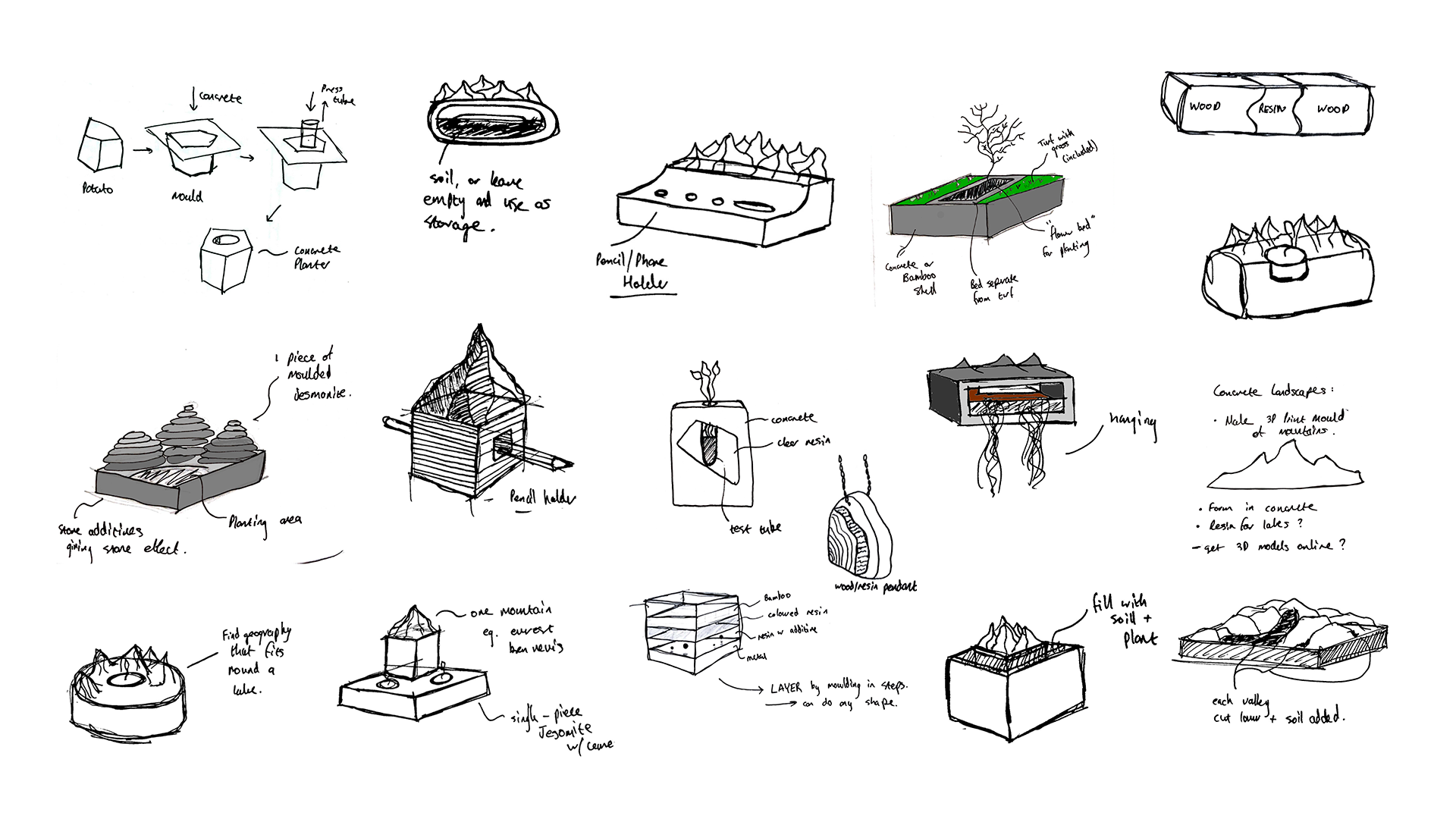
Initially the idea was to combine topography with functional products such as planters and desk tidies, but after tutorials and prototyping I decided to focus more heavily on the sculptural quality of the terrain itself. The mountain forms sitting on top of heavy geometric blocks felt visually strong enough on their own.
Generating terrain data
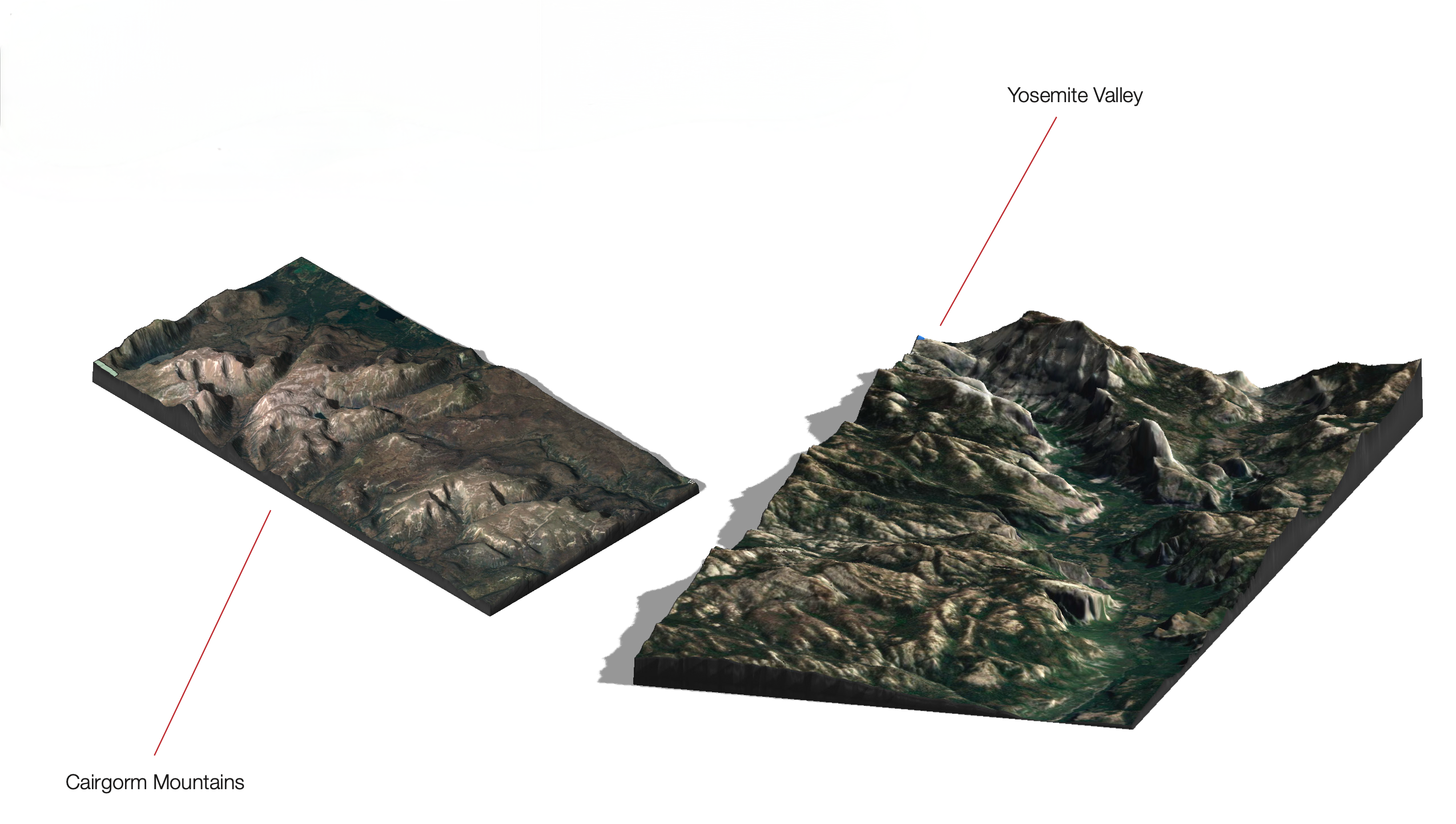
One of the more interesting parts of the project was figuring out how to actually turn geography into manufacturable geometry. I initially researched a manual workflow using DEM datasets and terrain conversion software, but most of the tooling was either outdated or difficult to work with.
I eventually came across a Photoshop extension called Atlas which could generate 3D terrain meshes directly from 2D heightmap data. That simplified the whole workflow massively and let me experiment quickly with different locations around the world.
The exported meshes were brought into Fusion 360, cleaned, simplified and converted into solid bodies. From there I could scale, exaggerate and crop the geography depending on how dramatic the resulting forms looked when cast.
Material exploration
Concrete was one of the first materials I explored, but it quickly became obvious that its weight and long curing time would make iteration difficult. I instead moved towards Jesmonite, which offered a concrete-like finish while being much lighter and far faster to cast.
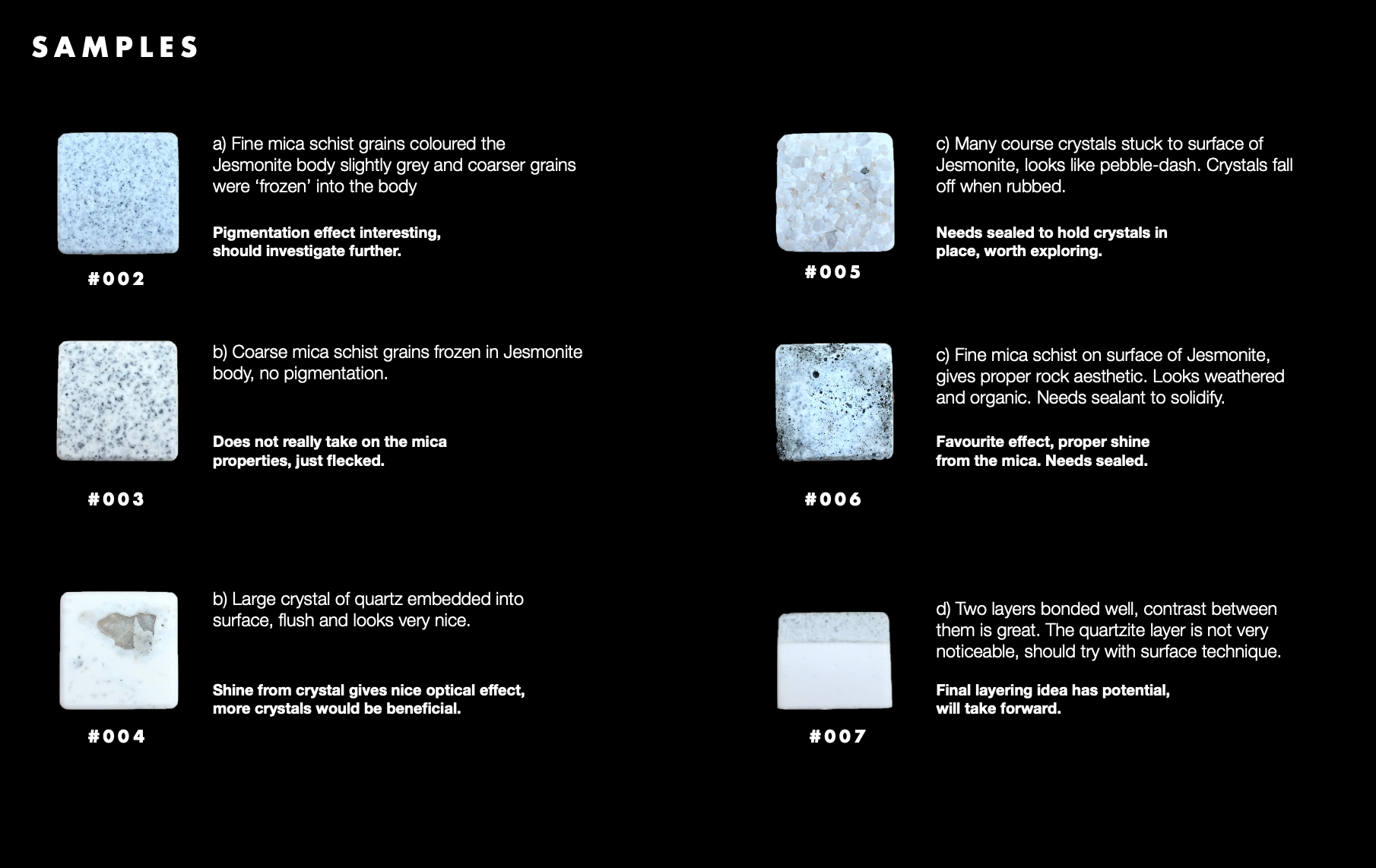
A decent amount of time was spent experimenting with additives and finishes. I crushed local rock samples into powders and aggregates, mixed marble dust into the Jesmonite, and tested layered pours, pigmentation and surface treatments. Some experiments looked awful, others ended up producing surprisingly convincing stone textures.
I also spent a weekend in the Cairngorms collecting rock samples to try incorporating local geology directly into the casts. While the idea was conceptually appealing, it eventually became impractical due to the sheer amount of manual rock smashing I was having to do in my Glasgow flat living room.
Prototyping and mould making
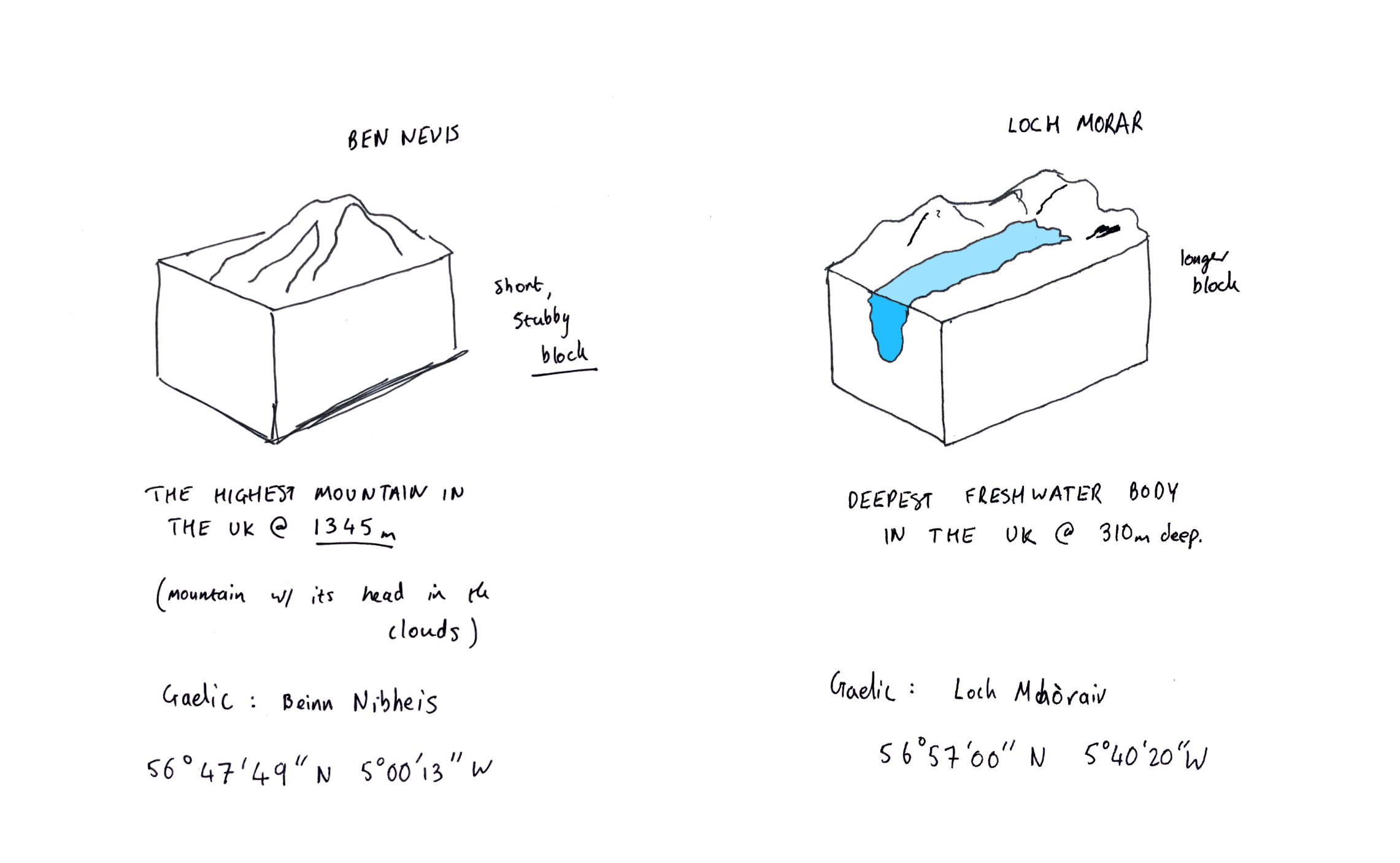
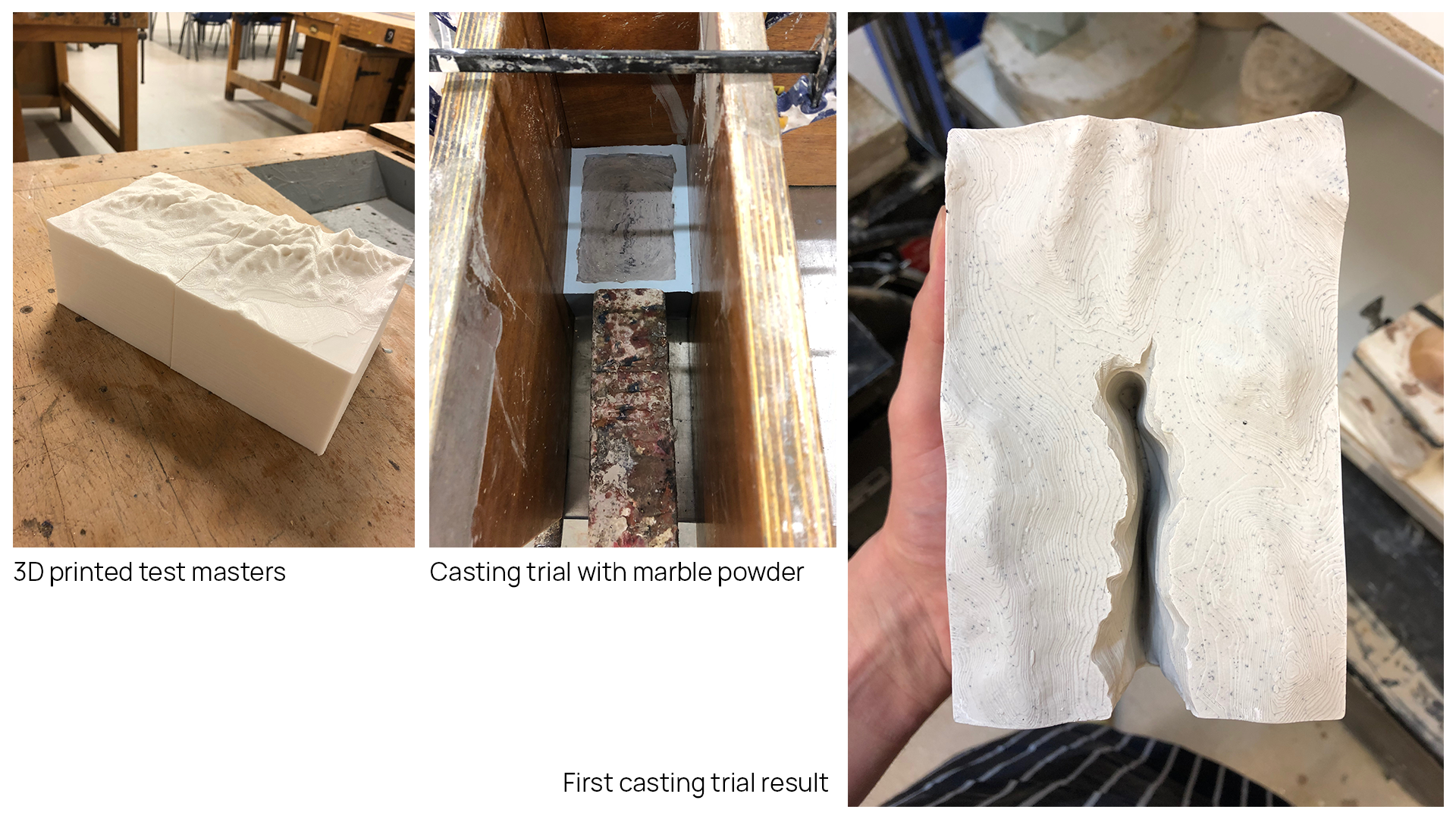
The final forms were 3D printed and smoothed using dichloromethane and sanding before being used as masters for silicone moulds. Through prototyping I learned fairly quickly that subtle terrain often became visually flat once reduced down to object scale, so I exaggerated peak heights and focused on more recognisable locations.
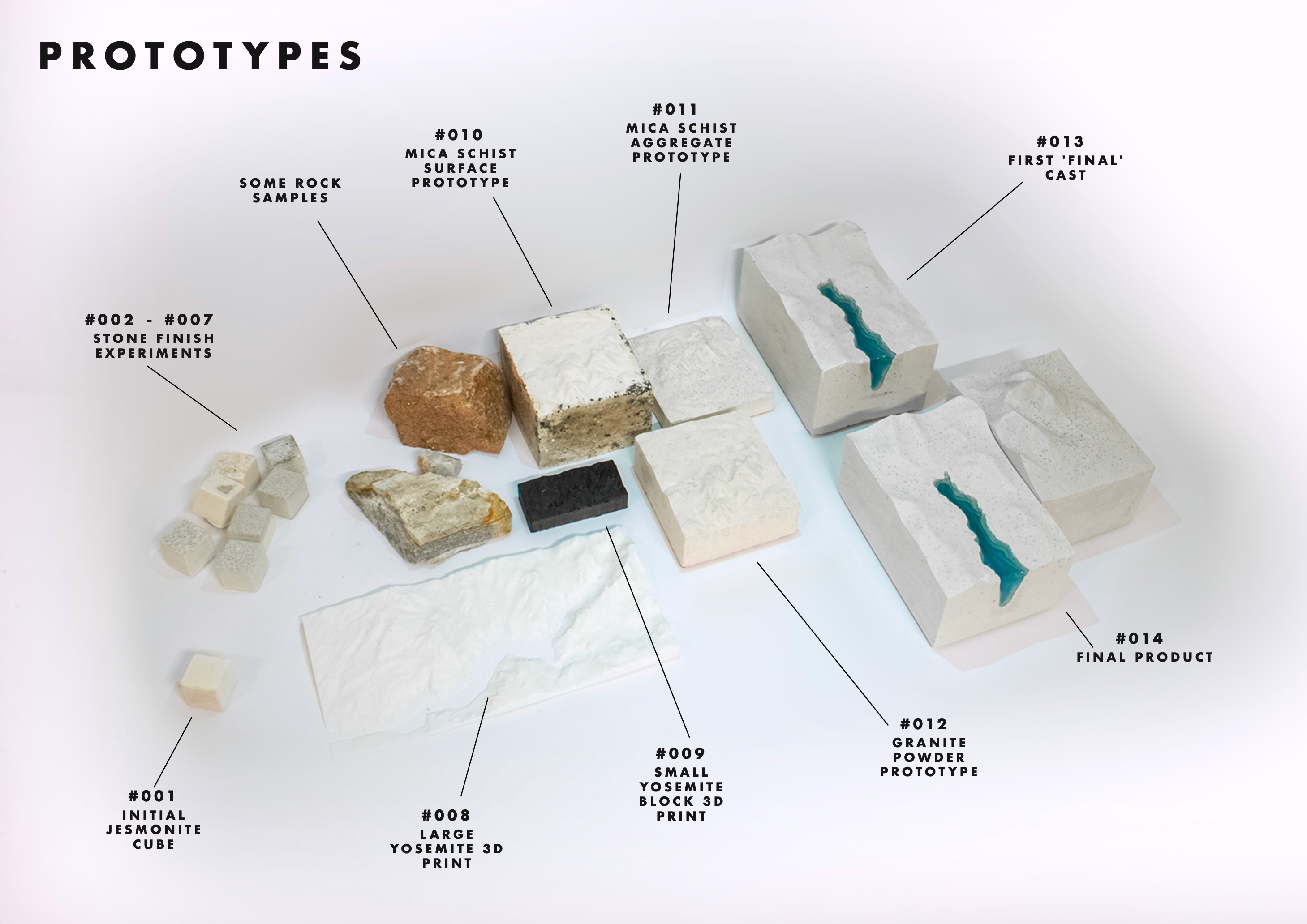
The final pair became Ben Nevis and Loch Morar. For Loch Morar I introduced a resin-filled cutaway loch section, which gave the otherwise matte stone object a contrasting glossy surface and a sense of depth.
The casting process itself became very iterative. Small changes in pigment ratios, marble powder quantities and sanding techniques made a surprisingly big difference to the final appearance. Over time I refined the process into something reasonably repeatable while still allowing each piece to remain slightly unique.
Branding and packaging
The final project was named Bho’n Uisge Gu Na Stùcan — Gaelic for “from the water to the peaks”. I wanted the naming and packaging to feel tied to the landscape inspiration behind the pieces.
Packaging was intentionally simple: laser-cut card bands wrapped around the blocks with etched typography and geographic information. Cork pads were laser cut and attached to the underside of each cast to prevent scratching and also subtly reinforce the material palette.
Outcome
The final objects ended up with a pleasing tactile finish and weight to them. I produced a run of ten pieces for sale at the Centre for Contemporary Arts, Glasgow (RIP), and priced them individually or as paired sets for use as bookends.
Pretty much every meaningful improvement in the project came from building, casting, sanding, testing and refining rather than trying to fully solve everything up front. It also introduced me to Jesmonite and silicone moulding, both of which I still find interesting as rapid methods for producing tactile, small-scale objects.